


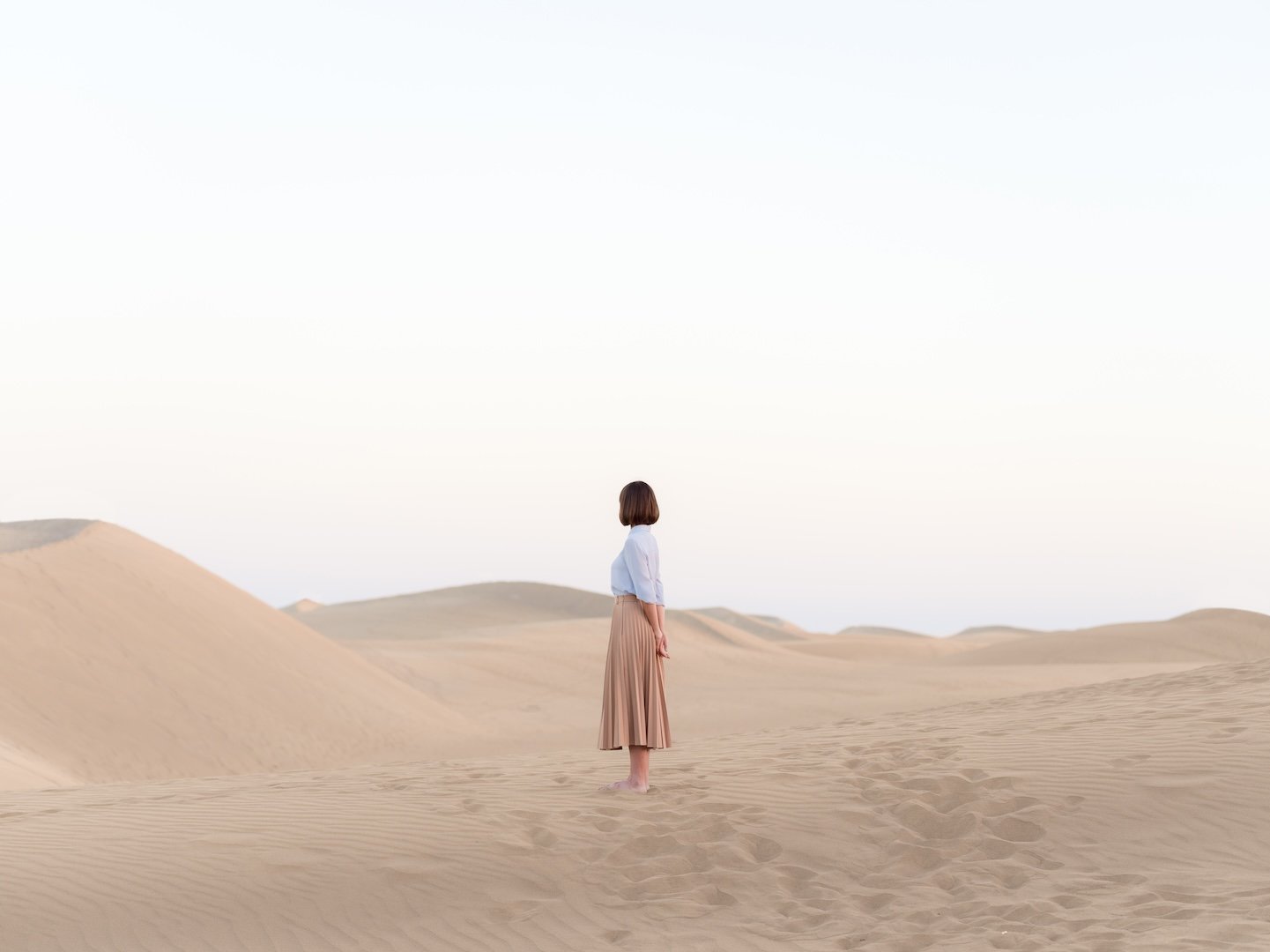
Identity. The World Within Us
Exploring the curatorial theme of LOOP’s first year.
What is the role of photography today?
By holding on to a fragment of the world and bringing it into the present, photography opens up a space for enquiry: into what is before us and, through that encounter, into ourselves. Every image carries the story of the person behind the camera and of what is photographed: people, environments, contexts, memories, relationships. Then there is everything beyond the frame: all that an image leaves out, yet continues to shape its meaning. Learning to look also means questioning these unseen presences, recognising how much of a photograph’s meaning takes shape beyond its surface, and how this affects us.
In what we see, or are able to sense, we often seek a connection, a familiar trace, a spark of empathy. We ask what is before us and how it makes us feel, influences us, might change us. Images offer us forms in which to recognise ourselves, models to embrace or distance ourselves from. They help shape identity: how we imagine ourselves, present ourselves to others and find a place within a shared story.
Today, a clear tension runs through this process. We want to stand out, to assert our individuality, while also feeling recognised, accepted and part of something. As shared points of reference and relationships become more fragile, the search for images that can represent us may also express a need to bridge a distance. A face, a setting, a gesture can become an opportunity to rediscover something familiar, to recognise an experience.
Meanwhile, images keep flowing. Opportunities to present ourselves and observe others multiply; the time we have to understand one another seems to shrink. We risk confusing visibility with recognition, exposure with connection. Exploring identity therefore also means examining how we use and read photographs: which ones we choose to tell our stories, which draw us in, which reinforce our beliefs and which manage to challenge them.
This enquiry has long been part of the medium’s history. In family albums, we preserve faces, celebrate bonds and give continuity to our stories. Every narrative begins with a selection: what we choose to remember helps define who we are. As early as the 1920s and 1930s, Claude Cahun’s self-portraits explored the multiplicity of the self through poses, disguises and photomontage, turning the image into a space for experimenting with identities that resist fixed definitions.
In 1955, with The Family of Man at MoMA in New York, Edward Steichen proposed a sense of belonging rooted in our shared humanity: birth, love, work and death became common ground on which to recognise one another. Around the same time, Robert Frank’s vision, brought together in The Americans, revealed the fractures in US society, the inequalities and divides running through a national identity. The search for what unites us came up against the differences and contradictions of living together.
In the 1960s, Diane Arbus questioned the conventions through which we distinguish the normal from the unfamiliar, unsettling the viewer’s position. From the late 1970s, Nan Goldin brought this enquiry into her own life: friends, lovers and intimate moments formed a portrait of a chosen family, revealed through closeness, vulnerability and conflict. Belonging also took shape beyond inherited models, through the lived bonds her photographs bore witness to.
In different ways, these approaches lay something bare: the multiplicity of the self, the contradictions of a community, the truth of an intimate experience. They do so through a particular gaze and visual form. As Susan Sontag writes in On Photography, “photographs are as much an interpretation of the world as paintings and drawings are.” Documentation and interpretation have been intertwined from the outset. Even the most direct account emerges from choices that make certain realities visible and leave others at the margins.
Today, this enquiry engages with an experience of images shaped by constant circulation, instant recognition and a shared visual imagination. Alongside direct testimony, staged scenes, colour, visual poetry and set design offer other ways of telling stories. References to pop culture can draw us towards an image, engage us and offer an initial point of connection. Beauty plays a part in this encounter: it awakens desire, creates closeness and can also disorient us. Through these forms, questions continue to emerge about who we are, where we belong and how we inhabit the world.
Recognising a visual code, however, is only the beginning of reading an image. We need to ask what that code expresses, which models it reproduces, whom it includes and whom it leaves out. This is where an image’s immediacy can open onto depth: when what attracts us also invites us to question the reasons for that attraction.
This is the thinking behind Identity. The World Within Us, the theme of LOOP’s first year: an exploration of personal, historical and social identities, how they change and what connects them. The approach is accessible, contemporary and informed by pop culture, with no rigid hierarchy between visual languages. From portraiture to landscape, documentary to allegory, posed images to improvisation, it encompasses people, environments and other forms of life: our relationship with what surrounds us also helps define who we are.
The narrative takes shape in the encounter between what an image brings with it and what each of us recognises, projects onto it and calls into question. LOOP invites us to give photographs time to become questions. And to stay with those questions long enough to reconsider how we see and tell our own stories.