

Marco Glaviano
«I have always been drawn to harmony.»
— Marco Glaviano
Biography
Marco Glaviano is an Italian photographer who helped shape the imagery of international fashion in the 1980s and 1990s. Born in Palermo in 1942, he studied architecture and developed an early interest in stage design and jazz, experiences that informed his sensitivity to composition, rhythm and the presence of his subjects.
After beginning his career in Italy, he moved to New York in 1975, establishing collaborations with American Vogue and Harper’s Bazaar. Through portraits of Cindy Crawford, Paulina Porizkova and Eva Herzigova, he helped build the supermodel phenomenon, creating images that became part of a generation’s visual memory.
His photography combines formal elegance with an attention to the personality of the sitter. In his portraits and Polaroids, a command of lighting and composition coexists with a more spontaneous, intimate dimension, revealing gestures, connections and moments beyond the set. Alongside fashion, jazz, landscape and portraiture remain enduring areas of his practice.
The author of more than five hundred covers and editorials for leading international publications, he designed and founded Pier 59 Studios in New York in 1995, combining his photographic practice with a commitment to the development of digital technologies.
His exhibition history includes solo presentations at the Italian Cultural Institute in New York, Palazzo dei Priori in Perugia and The Little Black Gallery in London. A Life of Photoshoots and Casa Glaviano, presented by Deodato Arte in Milan, explored the dialogue between his best-known images and the personal dimension of his archive.

In focusThe work of Marco Glaviano
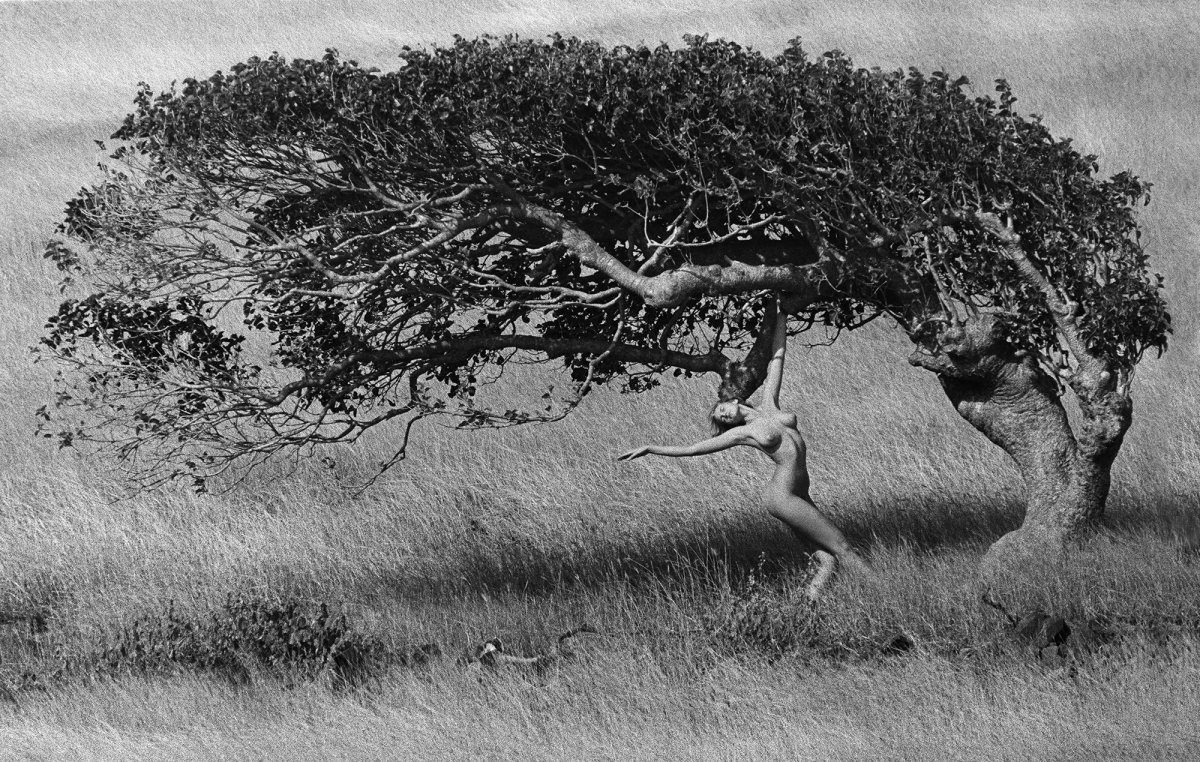
Marco Glaviano helped shape the imagery of the supermodel era through photography that combines glamour, sensuality and the power of portraiture. His architectural training emerges in the relationship between body and space: the pose creates lines and balances, while light sculpts volumes, giving the figure a sculptural presence. Compositional rigour coexists with a rapport with the sitter, allowing the subject’s personality to emerge even in the most carefully staged images. His Polaroids reveal the more spontaneous and intimate side of this exploration, while his openness to digital experimentation accompanies its expressive evolution.